
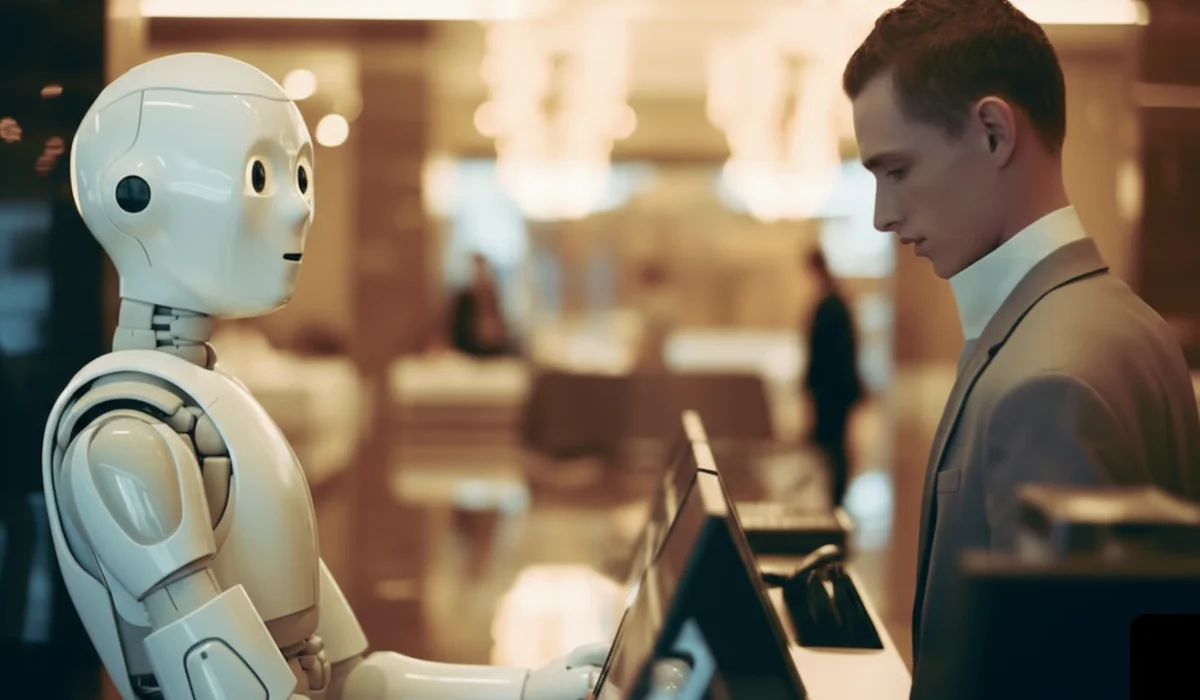
AI vs Human Jobs: Future Career Impact is one of the most discussed topics as artificial intelligence becomes part of everyday business operations. Across the USA, companies are adopting AI to improve efficiency, reduce costs, and automate routine work. This rapid shift is reshaping career paths and forcing professionals to rethink long-term job security. Understanding how AI affects employment helps individuals and organizations prepare for the future workforce.
How AI Is Transforming Traditional Roles
Artificial intelligence is changing how many traditional jobs are performed. Tasks such as data entry, scheduling, customer support, and basic analysis are increasingly handled by automated systems. This allows businesses to operate faster while reducing manual workload.
However, transformation does not always mean elimination. Many roles are evolving instead of disappearing, with employees focusing more on strategy, creativity, and relationship management. This shift highlights a major aspect of AI vs Human Jobs: Future Career Impact.
Jobs Most at Risk from Automation
Repetitive and rule-based positions face the highest risk of automation. Administrative work, basic accounting, and simple customer service functions are being replaced by intelligent software. These systems operate around the clock and reduce operational costs.
While some jobs decline, new opportunities also emerge. Businesses still need humans for complex decision-making, emotional intelligence, and leadership. This balance defines the real meaning of AI vs Human Jobs: Future Career Impact.
New Career Opportunities Created by AI
AI adoption is generating demand for entirely new roles. Careers in data analysis, AI system management, cybersecurity, and digital strategy are growing rapidly. Companies also need professionals who can translate technical insights into business actions.
Creative industries are expanding as well, with AI supporting designers, writers, and marketers instead of replacing them. These emerging careers demonstrate that AI vs Human Jobs: Future Career Impact includes job creation alongside automation.
The Importance of Reskilling and Upskilling
Continuous learning is becoming essential in an AI-driven economy. Professionals must develop digital literacy, problem-solving skills, and adaptability to stay competitive. Employers are investing in training programs to help workers transition into higher-value roles.
Reskilling enables employees to move from repetitive tasks to analytical and creative positions. This focus on learning is central to managing AI vs Human Jobs: Future Career Impact successfully.
Human Skills AI Cannot Replace
Despite rapid technological progress, AI cannot replicate empathy, ethics, and complex human judgment. Leadership, negotiation, creativity, and emotional intelligence remain uniquely human strengths. These abilities are increasingly valued as automation grows.
Businesses rely on people to build relationships, guide teams, and innovate. Human-centered skills provide long-term career stability and define the future balance of AI vs Human Jobs: Future Career Impact.
How Businesses Are Adapting Their Workforce
Organizations are redesigning workflows to combine AI efficiency with human insight. Hybrid teams use automation for routine tasks while employees focus on strategy and customer engagement. This model increases productivity without removing human involvement.
Companies are also redefining job roles and performance metrics. Workforce transformation strategies play a major role in shaping AI vs Human Jobs: Future Career Impact across industries.
Conclusion
AI vs Human Jobs: Future Career Impact is not about machines replacing people entirely, but about reshaping how work is done. AI automates repetitive tasks while humans move toward creative, strategic, and leadership roles. New careers are emerging, and reskilling is becoming essential for long-term success. Individuals and businesses that embrace change, invest in learning, and focus on human strengths will thrive in the evolving job market of 2026 and beyond.
FAQs
Will AI completely replace human jobs in the future?
AI will not completely replace human jobs, but it will transform many roles. Most careers will evolve, with automation handling routine tasks while humans focus on creativity, strategy, and interpersonal responsibilities.
Which careers are safest from AI automation?
Jobs requiring emotional intelligence, complex decision-making, creativity, and leadership are safer from automation. Roles in management, healthcare, education, and creative industries are expected to remain strongly human-driven.
How can workers prepare for AI-driven career changes?
Workers should invest in continuous learning, develop digital skills, and strengthen problem-solving abilities. Staying adaptable and building human-centered skills increases resilience in an AI-powered job market.
Does AI create new job opportunities?
Yes, AI creates new roles in technology, data analysis, cybersecurity, and digital strategy. It also supports creative professions by enhancing productivity and opening new business possibilities.
What is the biggest career impact of AI in 2026?
The biggest impact is the shift toward hybrid roles where humans work alongside AI. Professionals who adapt to this collaboration model will experience better career growth and long-term stability.